
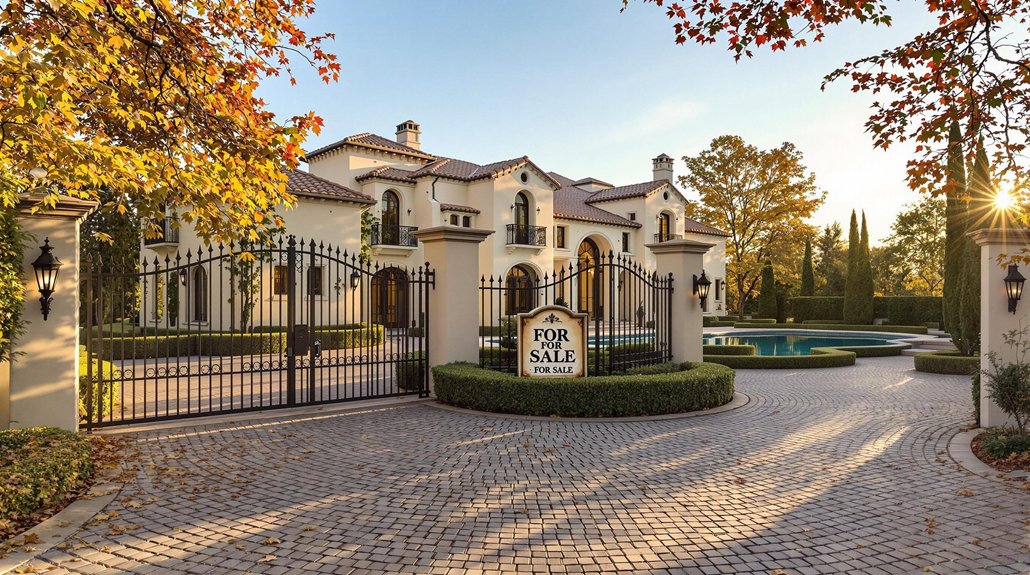
I'll tell you straight: luxury homes typically stay on the market 2-3 times longer than conventional properties. You'll find properties over $5 million taking 180-365 days to sell, while homes between $1-2 million move in 60-90 days. Ultra-luxury properties above $10 million can need up to 24 months to find the right buyer. Location, price point, and market conditions all play significant roles – and I've got specific strategies that can speed up this timeline.
Defining the Luxury Real Estate Market
While luxury real estate definitions vary by location and market conditions, I consider properties in the top 10% of local listings by price to qualify as luxury homes.
Beyond price point, these properties typically offer exceptional features, premium materials, and distinctive architectural elements that set them apart from standard homes.
Exceptional design elements, premium finishes, and architectural distinction elevate luxury properties beyond their standard counterparts in the housing market.
I've found that luxury homes often include amenities like wine cellars, home theaters, smart home technology, and resort-style pools.
The location must also meet specific criteria – whether it's waterfront access, mountain views, or proximity to exclusive urban areas.
Security features, privacy, and lot size play essential roles too.
In my market analysis, I've noticed that luxury properties commonly start at $1 million in smaller markets, while major metropolitan areas might require $5 million or more to qualify as luxury.
Average Timeline for Luxury Home Sales
Although luxury homes represent only a small segment of the market, they typically take 2-3 times longer to sell than conventional properties. I'll show you exactly how location and price affect these timelines, so you can set realistic expectations for your luxury property sale.
Market Duration | Factors Affecting Timeline
—————-|————————-
180-365 days | Properties over $5M
90-180 days | Properties $2M-$5M
60-90 days | Properties $1M-$2M
I've found that luxury homes in premier locations like Beverly Hills or Manhattan can sell faster than these averages, while those in less sought-after areas may take longer. Ultra-luxury properties priced above $10 million often require 18-24 months to find the right buyer. This extended timeline reflects the smaller pool of qualified buyers and the complex negotiations typical in high-end real estate transactions.
Factors Affecting Time on Market
Several key factors determine how long a luxury property stays on the market.
I've found that price positioning is the most essential element – overpriced homes languish while market-aligned prices attract qualified buyers.
Location greatly impacts duration, with prime areas selling faster than peripheral ones.
The property's condition and design aesthetic play important roles.
I've seen impeccably maintained homes with timeless architecture move quickly, while dated properties require longer marketing periods.
Economic conditions and available buyer pools in your area will affect timing.
Additionally, your marketing strategy matters – professional photography, targeted advertising, and exclusive networking can accelerate the process.
I've noticed that timing of the listing also influences results, with spring and fall typically showing stronger luxury market activity in most regions.
Market Trends and Regional Variations
Market dynamics in the luxury real estate sector vary dramatically across different regions and timeframes.
I've observed coastal cities like Miami and Los Angeles typically showing faster turnover rates for luxury properties than inland markets, often by 30-45 days.
In today's market, I'm seeing luxury homes in New York and San Francisco stay listed for 180-240 days, while similar properties in emerging luxury markets like Austin and Nashville move within 90-120 days.
The price point considerably impacts these timelines – properties over $10 million consistently take longer to sell than those in the $1-5 million range.
What's critical for you to understand is that these patterns shift with economic cycles, interest rates, and local market conditions.
I recommend tracking these trends before timing your luxury property decisions.
Strategic Pricing and Marketing Impact
When pricing luxury properties effectively, strategic positioning and thorough marketing make an essential difference in sale duration.
I've found that overpricing can extend market time by months, while precise pricing aligned with current market values accelerates qualified buyer interest.
I recommend leveraging professional photography, virtual tours, and targeted digital campaigns to showcase your property's unique features.
You'll want to focus on reaching high-net-worth buyers through exclusive channels like private listings and invitation-only events.
Additionally, staging your home to highlight its distinctive amenities will help justify the price point.
Consider implementing a dynamic pricing strategy that responds to market feedback.
I've seen luxury homes sell 30-40% faster when sellers adjust prices within the first 30 days if needed, rather than holding firm on an aspirational figure.
Tips for Accelerating Luxury Home Sales
Building on these strategic pricing and marketing principles, let me share proven techniques that can expedite the sale of your luxury property.
Strategic pricing and proven marketing techniques are essential elements that accelerate the successful sale of high-end luxury properties.
I recommend focusing on three key accelerators: staging your home with a professional who specializes in luxury properties, creating a sense of exclusivity through private showings, and leveraging my network of high-net-worth buyers.
I'll help you showcase your home's unique features through professional photography and videography, including aerial shots and virtual tours.
I'll also implement targeted digital marketing campaigns across premium platforms where affluent buyers spend their time.
By combining these techniques with strategic open houses for qualified buyers and brokers, I'll position your property to attract serious offers quickly.
Conclusion
While I've explored the nuances of luxury real estate timing, let me be candid: even the most prestigious properties face their own journey to find the right match. The well-appointed home that's taking a bit longer to move isn't "lingering" – it's waiting for its perfect steward. By understanding market dynamics and implementing strategic approaches, I'm confident you'll navigate these golden opportunities with precision and patience.


