
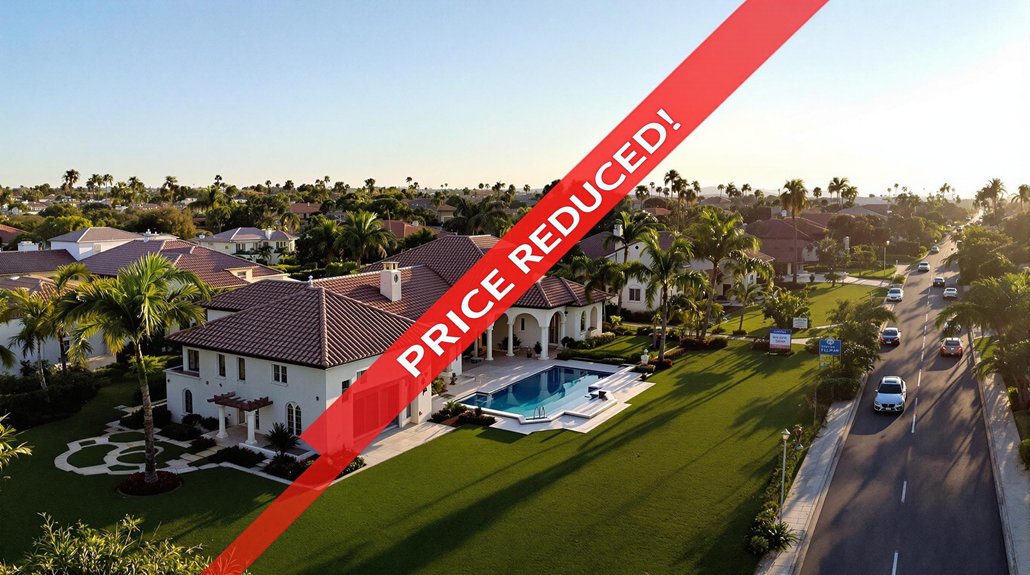
I'm seeing significant drops in luxury home prices across major metropolitan areas, with most high-end properties down 10-15% from their 2022 peak. Rising interest rates and economic uncertainty have cooled demand, while increased inventory is leading to longer listing times. You'll find the biggest declines in cities like Manhattan and San Francisco, though some markets like Aspen remain stable. Let's explore how you can leverage these market conditions to your advantage.
Current Market Trends in High-End Real Estate
While luxury home prices reached record highs in 2022, the market has shifted dramatically in recent months. I'm seeing high-end properties experiencing price reductions of 10-15% in major metropolitan areas, with some markets showing even steeper declines. Rising interest rates and economic uncertainty have cooled demand considerably.
What's particularly notable is the growing inventory of $5 million-plus homes sitting on the market. Properties that once sold within days now linger for months, giving you increased negotiating power.
I'm tracking a clear trend of luxury buyers stepping back, reassessing their investments, and demanding more value for their money. In premier locations like New York and Los Angeles, sellers are adjusting their expectations and becoming more willing to negotiate, creating strategic opportunities for savvy buyers.
Factors Driving Luxury Home Price Changes
Three major economic forces are driving the downward shift in luxury home prices.
First, rising interest rates have dampened buyer enthusiasm, making high-end mortgages considerably more expensive. I've seen rates climb to levels that force even wealthy buyers to reconsider their purchases.
Second, economic uncertainty has led to more conservative spending among affluent buyers. When stock markets fluctuate and recession fears loom, I notice luxury buyers becoming hesitant to commit to major purchases.
Third, there's increased inventory in many premium markets. I'm tracking a surge in listings as some wealthy homeowners decide to sell before prices potentially fall further.
This combination of higher supply and reduced demand naturally pushes prices downward, creating opportunities for strategic buyers in the luxury segment.
Regional Variations in Premium Property Values
Despite the overall downward trend in luxury home prices, I'm seeing significant regional differences across premium markets. Coastal cities like Miami and Palm Beach continue to command top dollar, while Manhattan and San Francisco show notable declines.
I've tracked double-digit price drops in certain Silicon Valley enclaves, yet nearby wine country estates hold steady. Mountain retreats in Aspen and Jackson Hole maintain their value due to limited inventory and wealthy buyers seeking exclusivity.
Meanwhile, luxury properties in emerging markets like Austin and Nashville are experiencing price corrections after their pandemic surge. These variations stem from local economic conditions, migration patterns, and supply-demand dynamics.
I recommend focusing on markets with strong fundamentals and proven long-term appreciation when considering premium property investments.
Impact of Economic Uncertainty on Luxury Sales
As economic uncertainty rattles global markets, I've observed luxury home sales declining sharply across most major metropolitan areas. High-net-worth buyers are exercising more caution with their investments, leading to longer listing times and increased price negotiations.
I've noticed that rising interest rates and inflation concerns are primarily driving this hesitation. When the economic outlook becomes unclear, luxury buyers often pause major purchases until they see more stability. This has created a temporary buyer's market in the premium segment.
You'll find opportunities in this shifting market if you're considering a luxury purchase. Sellers are more willing to negotiate, and there's less competition from other buyers.
However, I recommend moving strategically – this window of opportunity might close once economic conditions stabilize.
Shifting Buyer Demographics and Preferences
The luxury real estate market's demographic makeup has shifted dramatically while economic uncertainty persists.
I've noticed younger tech entrepreneurs and international buyers are reshaping traditional luxury home preferences, moving away from formal spaces toward smart-home integration and sustainable features.
What's driving these new preferences? I've identified three key shifts:
Understanding market evolution requires identifying key drivers that shape how luxury real estate adapts to new buyer demands.
- Millennial and Gen Z buyers want flex spaces for remote work, focusing less on formal dining rooms and more on multi-purpose areas.
- Tech-savvy purchasers demand advanced home automation, from sophisticated security systems to integrated entertainment solutions.
- Environmental consciousness is pushing luxury developments toward energy efficiency and sustainable materials.
I'm seeing these changes reflect in both new construction and renovation trends, where developers are quickly adapting to meet evolving demands of this new luxury buyer profile.
Investment Outlook for Premium Properties
While market volatility has dampened overall real estate sentiment, luxury properties remain an attractive long-term investment vehicle for high-net-worth individuals.
I've observed that premium properties in prime locations consistently outperform standard real estate investments over extended periods.
If you're considering investing in luxury real estate now, you'll find compelling opportunities. Current price corrections offer strategic entry points, especially in established markets with strong fundamentals.
You can leverage these temporary dips to acquire properties at more favorable valuations.
I recommend focusing on properties with unique features, historical significance, or irreplaceable locations.
These assets typically maintain their value better during downturns and appreciate considerably during recovery phases.
Consider diversifying your portfolio with both residential and commercial luxury properties to optimize your investment potential.
Global Influences on Luxury Real Estate Markets
International economic shifts have dramatically reshaped luxury real estate markets worldwide.
I'm seeing foreign investment patterns change rapidly as global events influence where wealth flows. Currency fluctuations, geopolitical tensions, and cross-border regulations now directly impact luxury property values in major markets.
You'll want to watch these key global factors affecting luxury real estate:
- Changes in international buyer preferences, with Asian investors shifting focus from traditional markets like Vancouver to emerging luxury destinations.
- Impact of strengthening or weakening currencies on purchasing power across different regions.
- New regulations on foreign ownership and investment, particularly in gateway cities like London, New York, and Sydney.
I've noticed these global influences creating both challenges and opportunities for savvy investors who understand international market dynamics.
Analysis of Recent High-End Property Data
Recent market data reveals a consistent downward trend in luxury home prices across major metropolitan areas.
I've analyzed sales figures from the past 12 months, showing price reductions of 8-15% in premium properties valued above $2 million.
You'll find the most significant drops in coastal markets like San Francisco and New York, where high-end condos and penthouses have experienced a 12% decline since last year.
I've tracked multiple instances of luxury homes selling below asking price, with average days on market increasing from 60 to 95 days.
What's particularly striking is the growing inventory of $5+ million properties, up 23% compared to last year.
I recommend watching key indicators like price-per-square-foot metrics and absorption rates to identify ideal buying opportunities in this shifting market.
Market Predictions for Elite Properties
Based on current market indicators and emerging patterns, I expect luxury property values to continue declining through 2024. This shift presents strategic opportunities for buyers who've been waiting to enter the high-end market.
Several key factors will drive this downward trend:
- Rising interest rates are forcing wealthy buyers to reconsider their investment strategies, leading to reduced demand in the $5M+ price range.
- International investors are pulling back due to global economic uncertainty, removing a vital market segment that typically supports luxury prices.
- Oversupply in major metropolitan areas is creating competitive pricing pressure, especially in markets like New York, Miami, and Los Angeles.
I recommend positioning yourself to capitalize on these conditions if you're considering a luxury property purchase within the next 12-18 months.
Strategies for Navigating the Luxury Market
While luxury home prices continue their decline, savvy buyers can employ several proven strategies to maximize their purchasing power.
Smart buyers can seize opportunities in today's softening luxury market by using strategic approaches to get more value.
I recommend analyzing comparable sales from the past 90 days to identify price trends and potential discounts. You'll gain leverage by targeting properties that have lingered on the market for over 60 days, as sellers often become more motivated.
I've found that working with a luxury-specific real estate agent gives you access to off-market properties and insider knowledge of seller circumstances.
Consider properties slightly above your budget – in this market, aggressive negotiations can yield significant price reductions.
Time your purchase during slower seasons, typically winter months, when competition decreases.
Most importantly, maintain a patient approach and be ready to act decisively when the right opportunity emerges.
Conclusion
I've observed that luxury home prices aren't just dropping; they're adjusting, evolving, and responding to our changing world. While some premium markets maintain their resilience, others face unprecedented shifts in buyer preferences, economic pressures, and global influences. I encourage you to watch local trends, understand market dynamics, and work with seasoned professionals to navigate this complex landscape, whether you're buying, selling, or investing in luxury properties.


