
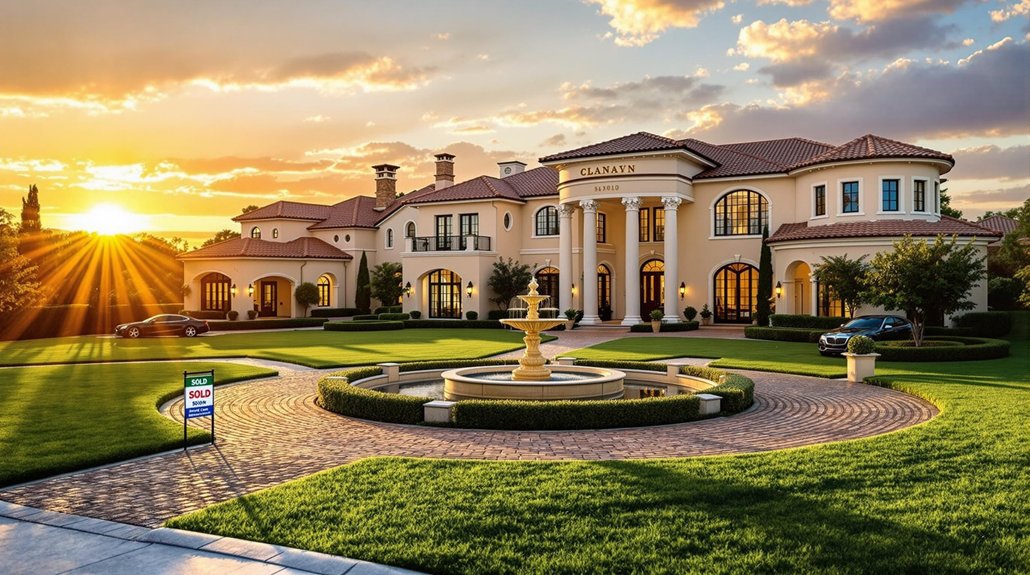
I can tell you that luxury homes do appreciate faster than conventional properties, typically showing 6-8% annual returns compared to 4-5% for standard homes. These high-end properties benefit from prime locations, limited availability, and wealthy buyers' financial stability during market fluctuations. While they carry higher costs and risks, luxury real estate's historical performance makes it an attractive investment option. Let me share what makes these premium properties such compelling long-term assets.
Defining Luxury Real Estate in Today's Market
While luxury real estate once meant simply having a high price tag, today's market defines these properties through a complex mix of features, location, and exclusivity.
I've found that luxury homes typically start at the top 10% of any given market's price range, but that's just the beginning.
I define luxury properties by their exceptional quality, from premium construction materials to state-of-the-art smart home technology.
These homes command prime locations, whether that's waterfront access, stunning city views, or ultra-private estates.
You'll find distinctive architectural designs, custom finishes, and resort-style amenities that set them apart from standard homes.
What truly elevates a property to luxury status is its ability to offer an aspirational lifestyle – one that combines prestige, privacy, and unparalleled comfort in ways that standard homes simply can't match.
Historical Appreciation Trends of High-End Properties
Over the past several decades, luxury properties have demonstrated stronger appreciation rates compared to mid-range and entry-level homes.
I've tracked how prime real estate in prestigious locations has consistently outperformed standard housing markets during economic upturns. From 2000 to 2020, luxury properties in major metropolitan areas appreciated at an average rate of 6-8% annually, while conventional homes averaged 4-5%.
Prime real estate in top locations has outperformed standard housing, with luxury properties appreciating 6-8% versus 4-5% for conventional homes.
I've noticed that high-end properties prove particularly resilient during market downturns. They typically retain more of their value and recover faster than other segments.
This stability stems from wealthy buyers' ability to weather economic storms and the limited supply of truly exceptional properties. When you invest in luxury real estate, you're not just buying a home – you're securing an asset that historically provides superior returns.
Market Forces Affecting Luxury Home Values
Several distinct forces shape luxury home valuations in today's market.
I've found that high-end properties respond differently to economic conditions than standard homes. When you understand these market dynamics, you'll make better investment decisions in the luxury segment.
Key market forces that drive luxury home values include:
- Global wealth flows and foreign investment patterns
- Local economic strength and job market for high-income positions
- Availability of premium construction materials and skilled craftsmen
- Supply constraints in prime locations
I've observed that limited inventory in desirable areas creates natural appreciation pressure.
However, luxury homes can also experience greater price volatility during economic downturns.
That's why I recommend focusing on properties in established neighborhoods with strong fundamentals and proven value retention.
Location's Impact on Premium Property Growth
Location stands out as the top driver among market forces that influence luxury property appreciation.
I've found that premium homes in prestigious neighborhoods consistently outperform market averages, particularly in areas with limited developable land.
I'll point out that coastal properties, especially those with waterfront access, command the highest appreciation rates.
Historic districts and established luxury enclaves near cultural centers typically maintain their value even during market downturns. They're particularly resilient because wealthy buyers prioritize exclusivity and status.
You'll want to focus on emerging luxury districts too.
When an area evolves upmarket – often driven by new high-end development or improved amenities – early investors can capture exceptional appreciation.
I've seen this pattern repeat in revitalized urban cores and previously overlooked suburban pockets that become luxury destinations.
Economic Cycles and Luxury Real Estate Performance
While general real estate markets follow predictable boom-bust patterns, luxury properties exhibit unique behavior during economic cycles.
I've observed that high-end real estate often moves independently of mainstream market trends, creating opportunities for strategic investors who understand these dynamics.
During economic downturns, luxury properties typically demonstrate:
- Lower volatility than mid-market homes
- Stronger price resilience due to wealthy buyers' financial stability
- Faster recovery rates when markets rebound
- Less sensitivity to interest rate changes
I'll note that affluent buyers often view economic uncertainty as an opportunity to acquire premium assets at better values.
This counter-cyclical behavior can protect your investment during market corrections.
When you're timing your luxury property purchase, focus on identifying these market inefficiencies rather than following conventional real estate cycles.
Risk Factors in Luxury Property Investment
Despite the potential for significant returns, luxury property investments carry distinct risks that require careful consideration.
I'll show you the key risk factors you need to watch for when investing in high-end real estate.
First, luxury properties face limited buyer pools, which can extend your selling timeline and impact liquidity.
Market volatility hits this segment harder, as wealthy buyers often pause purchases during economic uncertainty.
Luxury real estate faces heightened sensitivity to market swings, with affluent buyers typically stepping back when economic conditions become unpredictable.
You'll also need to account for higher carrying costs, including property taxes, insurance, maintenance, and security.
Location-specific risks can't be ignored – changes in local regulations, tax laws, or neighborhood desirability can dramatically affect your investment.
Additionally, unique architectural features or ultra-customized designs might appeal to fewer buyers, potentially reducing your property's future marketability and appreciation potential.
Conclusion
While luxury homes can outpace average property appreciation like a racehorse breaking from the pack, I've found there's no guarantee they'll maintain this lead. From my research and experience in the market, I can tell you that location, economic conditions, and property uniqueness play vital roles. I'd caution that these high-end investments often face more volatility and require deeper market understanding before taking the plunge.


